Wednesday, January 29, 2014

Looking at 2014: Windows 9, Galaxy S5, iPhone 6 and the death of the WiiU?

I know it’s been a while, but here is my first post of 2014! Lots has certainly happened in the past two months, so I’m going to try and recap the things that are going to be the most interesting to watch in the coming year.
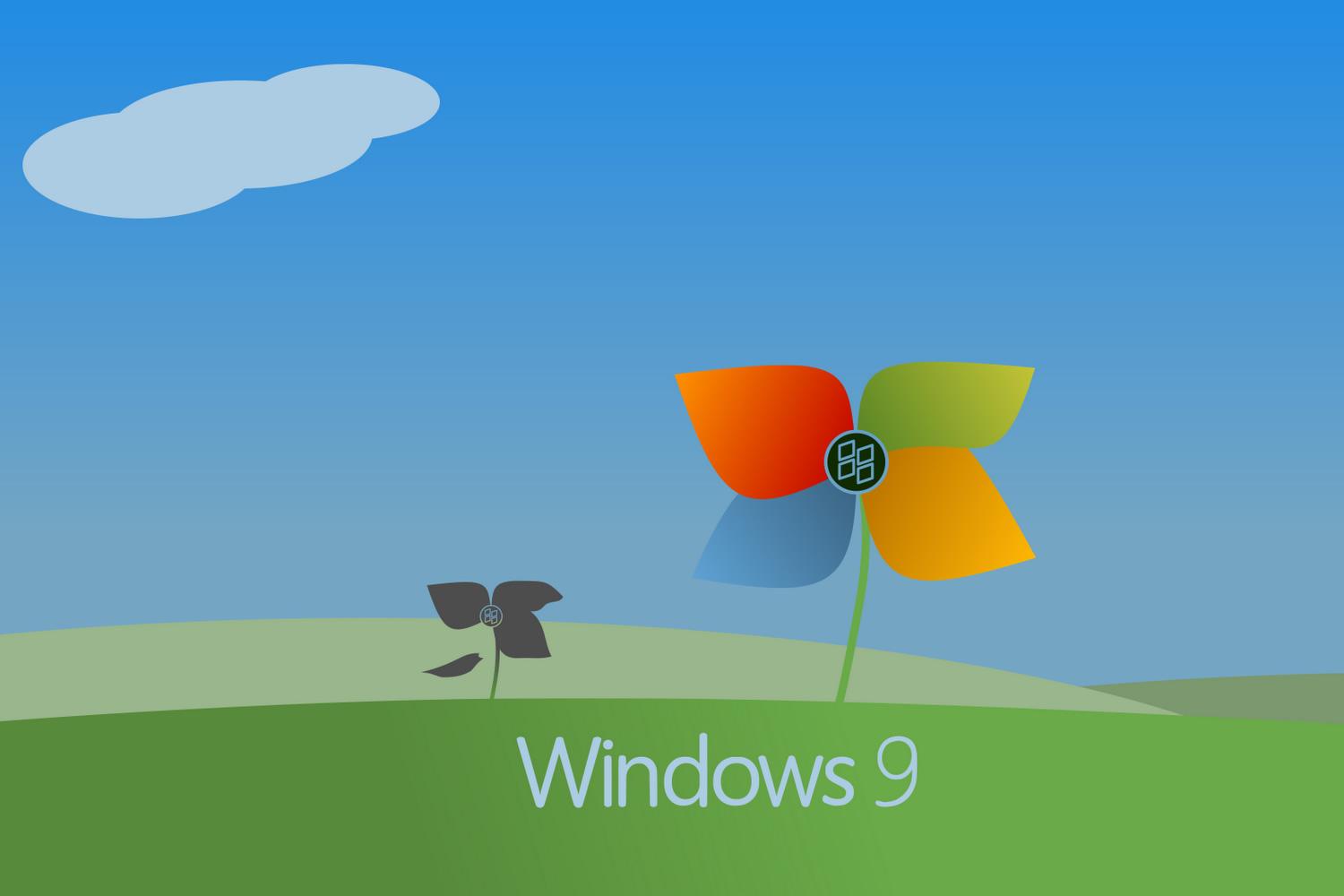
-Shortly after the release of Windows 8.1, Microsoft revealed that they are working on Windows 9. Windows 8 has been widely criticized, and consumers are very reluctant to try it, even though they don’t have much choice (if you really have your heart set on Windows 7, HP is selling some new PCs off their website preloaded with Windows 7). I personally think Windows 8 is fine, and that it has some really neat features, especially on a touch device. I think if you’re going to get a Windows 8 device, it has to have a touch screen. Anyway, after all this criticism, Microsoft hopes that Windows 9 will be to Windows 8, what Windows 7 was to Vista. They’re going to have some serious competition in the coming year, so it’s going to be interesting to see how they respond.

-Another company that didn’t have a great 2013 is Nintendo. The WiiU has been failing, with Nintendo posting financial losses for the first 9 months of 2013, and dropping its forecast for 2014 from 9 million units to 2.3 million units. That’s a significant difference, although considering they only sold 2.4 million units from April to December, it’s much more realistic. Nintendo also announced that their president will be taking a 50% pay cut, with cuts to the other members of the board as well. It’s gotten so serious, that everyone has started speculating on what Nintendo should do to be successful again. One of the most tossed around ideas is that they should release mobile versions of their popular series (Zelda, Pokemon, Super Mario, etc.) due to the popularity of these devices. I doubt Nintendo would relinquish control of these series, but things may get desperate.

- Apple has finally realized that the U.S. market is saturated with their products, and that it’s time to look elsewhere. In December, they announced a deal with China Mobile to sell the iPhone 5 and 5C in China, giving them access to another billion or so people. According to some sources, they aren’t doing quite as well as they had hoped, but we’ll have to wait until the March quarterly announcement to find out. They’ve also started selling the iPhone 4 in India. An interesting reversal of this, is that recently Chinese mobile phone makers have attempted to launch phones in the U.S. but are facing much more resistance. Apparently Americans are much more reluctant to buy Chinese products (ironic, considering almost everything is made in China), stalling the attempts of companies like Huawei and ZTE to enter the market.

- The last big one I’ll mention is the fact that there are already rumours and talk of the upcoming Samsung Galaxy S5 and the iPhone 6. I think this is pretty crazy considering the S4 came out in late April 2013, the iPhone 5S and 5C came out in September 2013, and the smartphone market is incredibly saturated. At this point, it is unlikely that either company can design something that is so new and mind blowing that it convinces users to upgrade sooner. For the S5, rumours are flying about an all metal body, a potentially curved screen, a supercharged battery, a fingerprint/retina scanner (following Apple), etc. The last one I find interesting because I wonder if anyone has done any research to determine if people actually use this/find it useful/identify it as a differentiating feature when buying a phone; or if Samsung is doing it because Apple did. The iPhone 6 is rumoured to be coming in at least 2 sizes; the standard 4.7” and potentially either a 5.3” or some sort of phablet device at 6”. This means Apple has finally listened to its customers! Other than that, it’s said to maybe focus on wireless charging and eye tracking movements (following Samsung). The S5 is thought to be released around February 2014, and the iPhone 6 anywhere between June and September 2014.

That’s the majority of the upcoming things to watch for. A quick mention to: Google who bought Nest, a company that makes smart home devices (fire alarms, thermostats, etc.), for $3.2 billion, and sent everyone into a panic about Google entering our homes and controlling all our information; and Blackberry who released version 10.2.1 of its operating system yesterday, which apparently is actually pretty good, and caused stock to increase 3%. 


Friday, November 22, 2013

Apple's Lawsuit Win & Microsoft's Bizarre 'Scroogled' Campaign

The focus of today’s tech news is definitely the release of the Xbox One. Now that both consoles have hit the market (the PS4 was released last Friday), it will be interesting to see who does better, especially over the Christmas period. The PS4 has already been having some negative feedback, with several users complaining about the blue light of death, with the device not connecting to the TV, leaving the screen blank. This aside, I’d like to mention some other news items that caught my eye, amongst all the talk of consoles.

In a bizarre reversal of manufacturing trends, Foxconn (which is the Taiwanese company that manufacturers the majority of Apple’s devices), announced that they are building a manufacturing plant in the U.S. This plant, which will be in Pennsylvania, will be largely robotic, but is estimated to bring 500 jobs to the area. Foxconn announced that they wanted another plant in the U.S. because of the large domestic demand for Apple’s products. Will this be a growing trend? Can the decrease in transportation costs make up for the higher cost of labour?

More good news for Apple, they were just awarded $290 million in their ongoing patent battle with Samsung. This brings Samsung’s total to about $900 million in payments to Apple, which is less than the original $1.05 billion settlement, but still an enormous amount money.
Scroogled Keep Calm Mug view 1

And in the strangest attack on the competition, Microsoft has launched a website telling you to avoid getting “scroogled.” This is meant to focus on the amount of data that Google collects from users and general privacy concerns when it comes to Google. They say they launched the campaign “on behalf of consumers” and that you should “try Bing for an honest search”. If this isn’t baffling enough, there is even a store, where they sell things like t-shirts that say “Keep Calm While We Steal Your Data”, complete with the Google logo. I’m confused as to how Microsoft thinks this a good idea at all. Maybe they should focus on finding a CEO who will help them develop new and innovative products that compete in the marketplace without attacking the competition. Good to see that the competition between the four tech giants is alive and well...

Friday, November 15, 2013

New Phones: YotaPhone, Jolla Phone, Eco-Mobius & G Flex

This week I’m going to focus on some interesting phones (real and conceptual) that have been mentioned recently. These phones all introduce something new and different from what we’ve seen, and this will be the key to success in the already saturated smartphone market – differentiation.

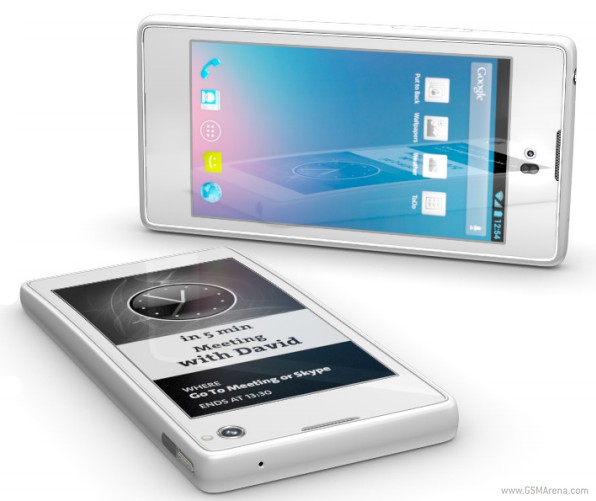
First off is the YotaPhone. This is a Russian made phone that features not one, but two screens. The phone features 4.3 inch LCD display on the front and a 4.3 inch E-Ink display on the back. The E-Ink display is the same technology found in the Kindle and Kobo e-readers. The phone essentially gives you the best of both worlds, by literally giving you both. The E-Ink screen is very low power, and the idea is to use it to display notifications (such as the time, or messages) without draining the battery. The screen can also be used by those who prefer to read on a screen that isn’t backlit. The phone, which is made by a company named Yota Devices, will be running Android 4.2.2, giving users full access to any games and apps on Google Play. The phone is said to be released internationally, sometime in December.

The next phone is called the Jolla Phone. Interestingly, Jolla is an independent Finnish company formed by a number of ex-Nokia staff. The unique feature of this phone is that it will have their newly designed operating system, called Sailfish. It offers some interesting panning features, and allows interaction with applications directly from the home screen. The idea is to offer an incredibly personalized experience, pretty much the opposite of an iPhone. The device itself has a low resolution 4.5 inch screen, and looks to be priced at $535, which is fairly steep for the features of the phone. Jolla is expecting the new operating system to draw users in, and is especially hoping to benefit from some national pride in Finland. The device will be launched on November 27th in Finland, and they hope to be selling the device across Europe before the end of 2013. No word yet on an international release.

ZTE Eco Mobius Concept Modular Smartphone
This next phone is a concept phone called the ZTE Eco-Mobius. Very similar to the Phonebloks concept that I mentioned earlier this month, the phone would have interchangeable modules that slide into place using tracks and features pieces that are attached magnetically. This concept has been designed by China-based ZTE corporation, and is designed so that all the pieces are replaceable and swappable, to reduce waste.

The last phone I’ll mention is LG’s G Flex phone. Very similar to the Samsung Round that I talked about previously, LG looks like it will get an edge by being the first to bring a curved phone to the United States. The G Flex features a curved display, and self-healing backing, which apparently fixes scratches in seconds. Another neat feature is that unlike the Samsung Round, the G Flex is actually somewhat flexible. The rumours have been flying that the phone will be released in the next few months through multiple U.S. carriers, but nothing official has been announced.

And while we have all of these unique phones being released or designed, there are many other phones trying to stand out based on various features. For example, Google’s Motorola just released an actual low cost smartphone (unlike the high priced iPhone 5C). The Moto G is not only going to run Android Kitkat (4.4) by January, it also has 720p 4.5 inch display and a quad core processor. All of this for $200, unlocked and off-contract. Some are trying to differentiate themselves by the camera (Nokia 1020), or by size (Sony Xperia Z Ultra). And all of these phones offer various operating systems. Android is running away with the lead, as third quarter numbers show that 4 out of every 5 smartphones sold in the world is running Android. Samsung is leading the way in Android sales selling 80.4 million phones this quarter, well above the 30.3 million iPhones sold by Apple. Microsoft moved up with the Windows phone becoming the world’s No.3 smartphone OS, selling 8.9 million units in the third quarter (more than doubling last year’s total). And this meant that Blackberry sales plummeted, selling half as many handsets as they did this quarter last year. It will certainly be interesting to see what comes next in this every changing phone market.

The last thing I’d like to mention is that rumours have been flying around that Facebook offered Snapchat $3 Billion to buy its business, and Snapchat said no. Snapchat is an application that allows users to send pictures which autodestruct after a few seconds. It’s usage has been increasing substantially, with the company reporting 350 million messages sent a day through its service. This all comes after Facebook announced that teen usage is declining, which may have been the reason for this offer. It will be interesting to see how Snapchat does in the future, and if it was worth turning down $3 Billion.

Friday, November 8, 2013

Twitter's IPO, Blackberry's Struggles and An Upcoming Game System Battle

For once Apple was not front and center in headlines this week. Twitter took that title and ran with it. Here’s a rundown of the week’s excitement:

After much talk, Twitter finally had their IPO (initial public offering, for those wondering what IPO means). They debuted on the NYSE at $26 a share, and that increased almost immediately. They jumped up to a high of $50 on their first day of trading, finishing the day at $44.90. Investors seem to be very divided when it comes to Twitter. Many feel that Twitter has become a service that is integrated in our daily lives, similar to Facebook, and that it has only scratched the surface of potential advertising revenues. Clearly these are the people that bought Twitter shares immediately. Others warn of another tech bubble, clearly in disbelief that Twitter’s share price is almost 50 times its revenue (Steve Rattner). The IPO allowed them to raise a potential $2.1 billion. To put that in perspective, Twitter’s third quarter revenues were $168.6 million, posting a $64.6 million loss. Basically investors just gave $2 billion to a company that is losing more and more money, even though it’s revenues are increasing. It will be interesting to see how long Twitter remains in everyone’s good graces now that they are in the public eye. 

Blackberry on the other hand, has had a rough week. On Monday, they announced that they were firing their CEO, and that they were not going to be selling themselves. They took themselves off the market, despite interest from several different groups. This quickly dropped their share price down to $6.50, a far cry from their high in the $200 range back in 2007. Fairfax Financial decided that instead of purchasing the company, they would inject $1 billion into the company. There are lots of rumours that Blackberry will focus solely on software and stop making phones. One good piece of news for Blackberry is that 20 million users signed up for bbm in the first week of it being available on Android and iOS devices.

Microsoft has been in the middle of some interesting rumours this week, with potential new CEO Stephen Elop being quoted as saying that he would be okay with getting rid of Microsoft’s Xbox and Bing divisions. There have been calls from various investors over the past couple of weeks for Microsoft to do just that, but I really don’t see it happening. Microsoft has invested large amounts of time and money developing the Xbox one, and it looks to recoup most of that with its upcoming release. And as much as I hate Bing, Microsoft has worked very hard to integrate it into all of their divisions. It’s a big part of Windows 8.1, and they are continually trying to grow its user base. I think it’s very unlikely that Microsoft loses either of these divisions.

On the topic of the Xbox, I’m personally very excited to see the Xbox One vs. PS4 battle play out over the upcoming Christmas season. The PS4 is being released on November 15th, and is the lower priced of the two, coming in at $399. The Xbox One is being released on November 22nd and is priced at $499. Keep in mind, the Xbox One comes with the Kinect sensor, which accounts for the $100 price difference. It’s certainly an interesting move by Microsoft to bundle the game system and the motion sensor. Many believe that the $100 price difference will be a deal breaker for those choosing a new system. Both systems have various new and improved features, such as new controllers, a large assortment of applications (such as Netflix, Hulu, Amazon’s video service, etc.), and a large assortment of games unique to each system. Which system are you leaning towards? 

And it wouldn’t be a tech update without a mention of Apple. Apple has yet to announce a release date for the iPad mini 2, as they are having trouble getting enough stock to meet the expected demand at launch. Sources say that Sharp is having trouble making the screens. The expected launch date is November 22nd, a week before black Friday. As well, apparently an iPad Air on display in Australia burst into flames and continued to emit smoke until the fire department arrived. Apple hasn’t commented but they did send someone to collect the unit so that they can look into it further. Perhaps I should be giving the iPad Air at my store a wide berth. As much as I hate to admit, it is a beautiful device, very light and slim.

And that’s your rundown for the week, hopefully it helps you get all caught up on what’s going on in the world of tech. Have a good weekend!

Sunday, November 3, 2013

Project Ara, Apple's Battery Issues and a Crazy Lawsuit

Last week, I focused on Apple’s product announcement because as always, Apple was front and center. Consumers have gotten used to Apple being the most innovative, and were once again looking for something new and magical. Time to talk about some of the other things that happened in the world of technology this week and last week.

Motorola's -Motorola has announced an interesting new project, called Project Ara, which proposes to build phones out of blocks that are interchangeable. The hope is to make phones greatly more customizable, and reduce the amount of cellphone waste. The phone will have an endoskeleton, basically a core structure, that will hold all the blocks together. Motorola plans to make this a third-party project, allowing anyone to make blocks and provide innovation. Basically using the concept of Android, where everyone is given access and can make changes as they wish, on a physical product. Motorola has already teamed up with phonebloks, an open source project that has been working on a similar idea. They have a really great video on their website, explaining the concept (https://phonebloks.com/).

-Recently, Google joined the $1000 club, their share price surpassing that mark for the first time. Astounding growth for the company that debuted at $85 in 2004. This jump came after they announced revenues of $14.9 billion for the quarter, an increase of 12% over last year. They are currently sitting at $1027.
-And now, back to Apple. They have announced battery issues with some of the iPhone 5S’s. Some of the batteries drain very quickly, or take much longer to charge. This comes after they worked to extend the battery life on the new iPhones. They also announced their earnings for the fourth quarter of their fiscal year. They increased their revenue, making $37.5 billion (compared to $36 billion the year before), but their profit decreased to $7.5 billion (down from $8.2 billion the year before). This is very interesting, indicating that they have lost some of their high operating margins, and perhaps find themselves fighting to keep up. 

-An interesting quote:
Apple has -- compared to most technology companies -- nearly unlimited resources. Billions in the bank and plenty of time between upgrades. If Apple can expend resources to shave thickness in 1/100th of a millimeter increments off the iPad to create the iPad Air, the company sure as heck ought to be able to figure out a word processing application. (Chris Maxcer).
I think this perfectly describes Apple’s problem right now. They have plenty of resources, but hardly any innovation. They are giving away their software for free in an attempt to undercut Microsoft and sell more hardware, but they are quickly losing their high margins.

Lastly, I want to mention an incredible lawsuit that has just been launched. Apple, Microsoft, Sony, Blackberry and Ericsson have filed a lawsuit against almost every company that has made an Android phone. This means Samsung, LG, HTC, Huawei, and many more. The lawsuit indirectly targets Google as well. Having clearly decided that they can’t beat Android in the market (it currently has an 81% market share), they have decided to try and beat it (and Google), in the courts. This lawsuit comes from thousands of patents acquired from Nortel, many of which target Google’s money maker – advertising. It will be interesting this see this play out. This article explains the situation very well: http://venturebeat.com/2013/11/01/judgement-day-for-android-apple-microsoft-file-lawsuit-against-google-samsung/

And now time for some Sunday football. Enjoy!

Thursday, October 24, 2013

New Products From Apple; And What We Didn't Get

This week we were treated to several new product announcements. As always, the world was firmly focused on Apple, who once again left everyone (or at least me) wanting just a little more. I have to say, they certainly learned something from last year; do not reveal your products all at once. By releasing new products at various intervals, Apple ensures that they are currently in the news. From the constant speculation (what is going to be released, and when), to the pre-announcement buzz (we know the date, but no product specifics), to the actual announcement (yay product!), to everyone’s impression of the product (reporters, go!), to the actual release of the product (now the early adopters can finally buy one), to the announcement of how many Apple sold in the opening weekend (millions and millions), and back to the buzz of the potential next product (iWatch anyone?). This is an endless, and incredibly smart media strategy on Apple’s part. But I’ve gone a little off topic. Here is another one of those ‘impression of the product’ posts I mentioned above.

Apple announced the new iPad Air, following in the footsteps of their greatly successful Macbook Air series, with Air being used to indicate just how thin and light the product is. The iPad Air is barely 1 pound, and 0.29 inches thick. What’s missing, is a fingerprint sensor, which many people thought was an obvious addition after the iPhone 5S. Apple has also stuck with their standard colour scheme of white and black, no option for a gold iPad to match your gold iPhone. The new iPad mini will have retina display and an updated processor, almost literally becoming a mini version of the full iPad. The biggest difference between them? The price. The iPad mini 2 will start at $399, while the iPad Air will start at $499.

Apple has clearly decided not to fight the market share battle, but to focus on keeping their high margins. They announced that they will be discontinuing the 4th generation iPad, but will continue selling the iPad 2 for $399. For the same price, you can the iPad mini 2 which has a faster processor and retina display. For another $100 you can get the iPad Air. Why would anyone purchase a device that is 3 generations back, especially in an industry where changing is occurring so quickly? The main reason for keeping the iPad 2, is to show the stark difference between it and the new iPad Air. The $399 price for the iPad mini 2 is also surprising, considering that for $249 you can buy the Nexus 7 FHD, which is a wonderful 7” tablet with HD resolution (not quite as good as the retina display), and comes with the newest version of Android.

Apple also announced their new operating system, Mavericks. They are giving it away for “free”, as opposed to the $20 they usually charge. Many have claimed that they are taking a direct shot at Microsoft with this, but clearly people don’t understand the concept of free. To download Mavericks you need to have purchased a Mac (minimum $1000), and at least have snow leopard (3 operating systems ago), or pay to get snow leopard, and then download Mavericks for free. Windows 8.1 was just released and it was also “free” for users who had Windows 8. I certainly don’t think the lack of a $20 fee for an operating system upgrade is going to have any impact on whether consumers choose Mac or PC. Considering there was a lot of backlash for OS 7, we will see what people think of Mavericks.

Apple introduced the Mac Pro, and a new set of Macbook Pro’s, but what I want to mention is what Apple didn’t talk about. They didn’t introduce a cover/keyboard for the new iPads, which I think is a huge mistake considering how wonderful Microsoft’s keyboard covers are. Apple has this whole attitude of integration, yet they are allowing third party companies to continue to make the keyboards, none of which work quite as well with the iPads as they should. Perhaps they don’t believe anyone needs a keyboard to enjoy their iPad, but with the discussion swiftly turning to tablet vs. laptop, people are starting to use their tablets to do more and more. Apple also didn’t mention AppleTV or anything about an iWatch.

Overall, I think Apple once again failed to introduce anything new or different. Perhaps we’ve come to expect too much from them, but you wonder at what point the world starts to look elsewhere for something innovative. The floor is definitely wide open for someone to come in and steal the show.


Let me know what you thought of Apple’s announcement; were you disappointed? Or did you find it exciting?

Monday, October 14, 2013

Twitter TV Ratings, Samsung Round and The Canadian Government Winning

The world’s focus for the past week has been on the ongoing government shutdown (which is now entering its third week), and the fact that the U.S. government will reach their debt ceiling on October 17th. Unless the Democrats and the Republicans can figure out how to get along, and agree to raise the debt ceiling, the U.S. will default on its debt. This has many economists stating that such a default will result in a severe crash of the U.S. economy, which will likely take the world economy with it.

Others are certain that the government will never let this occur, due to the severe impact it would have on the world as a whole. I read an interesting quote the other day, where the person (who lived in Europe), said that the U.S. is so powerful that the decisions it makes has such a large impact on them, that it is like Obama is their president too. In their opinion, this is unfair because they cannot vote for the U.S. president, and therefore have no say over who is in charge, even if their decisions affect them. I thought this was an interesting point of view. But it looks like people are finally starting to get nervous, with three of the  major stock markets (Dow Jones, Standard & Poor, Nasdaq) dropping this morning.

Now onto the tech world:

- Neilsen, the global measurement company that determines size and composition of TV audiences among other things, has announced a new measurement. Twitter TV ratings. Starting soon, they will measure not only the twitter “authors” but the twitter “audience” who are reading tweets about TV programs. Basically they've determined that the TV twitter audience for a show is 50 times the number of people who are generating tweets about it. This is certainly going to help companies increase their social media, but how exactly is this going to help advertisers? An offshoot of the Twitter TV ratings should perhaps include the number of people who tweeted about an ad, or during an ad, to give the advertisers an idea of how many people did, or didn't watch it.

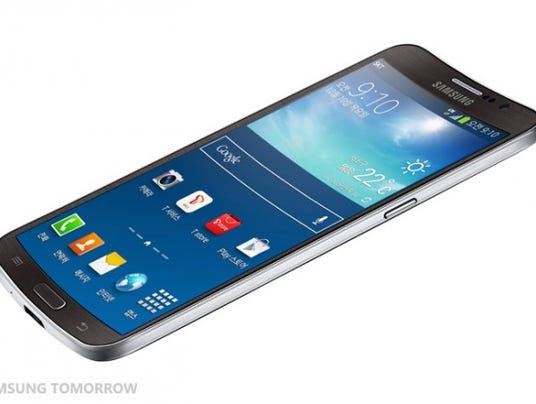
- Samsung has announced a new phone, the Samsung Round. Available only in Korea (for now), it is a curved smartphone. Samsung has yet to indicate if the phone is easier to hold or carry, or if the rounding serves any purpose at all. But in a world where the smartphone market is now saturated, with identical looking rectangular phones, having something different is never bad. They’ve also built in some features to do with the curve, such as flipping songs by rocking the phone. It will be interesting to see how the phone does.

- Pokémon X and Y were released globally on Saturday, the first time Pokémon is released in all global regions at once. Some interesting changes include, a new Pokémon type (fairy), increased 3D immersion, customizable trainer looks, sky battles (only for flying Pokémon) and mega evolution, in which fully evolved Pokémon can evolve into mega form during a battle.

- Lastly, the Canadian Government has announced that it will require TV providers to unbundle channels, which means, consumers will be able to pick and choose the channels they want. Hallelujah! You have no idea how long I have been waiting for this. This is all part of the government’s fight against industries that are monopolized and consumer unfriendly. This makes me like the Canadian government just a little more.

And on that note, Happy Thanksgiving!