Thursday, June 19, 2014

Amazon's Fire Phone, Facebook's Slingshot App and Blackberry's Passport

As expected, Amazon announced that they are indeed entering the phone market, with a device called the Fire Phone. It’s running a very specialized version of Android that they call Fire OS, similar to what is running on their e-reader. It’s got a 4.7” screen, putting it somewhere between an iPhone (4”) and the Galaxy S5(5.1”). But let’s talk about what really makes it different.
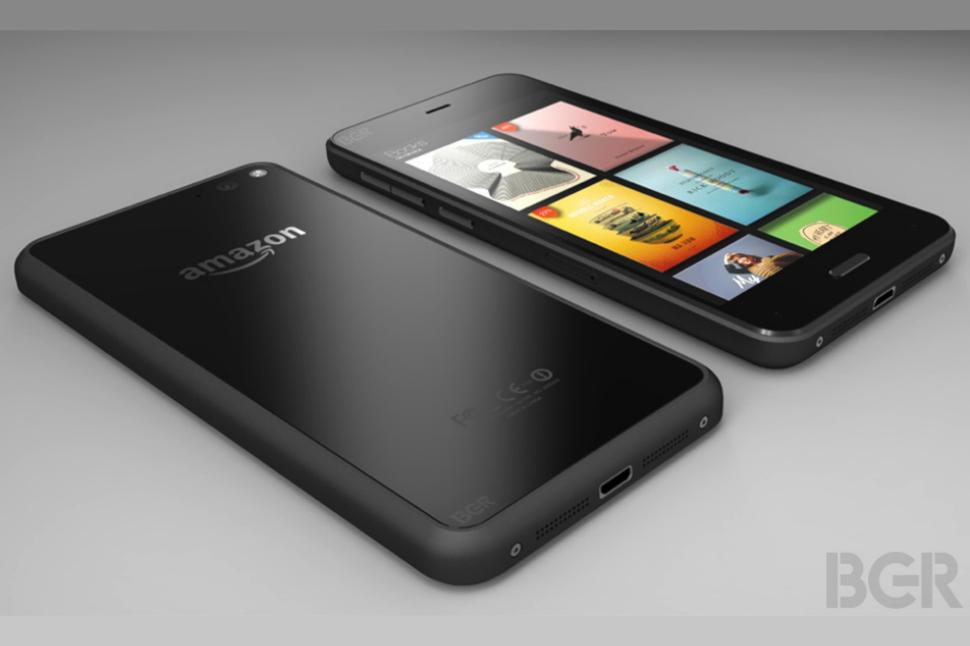
The Fire Phone has four front facing cameras equipped with facial recognition which allows the screen to produce 3D effects. The screen moves with you, changing the view based on the angle of your face. It also allows you to tilt and swivel the phone in various applications, instead of having to scroll or swipe (http://gizmodo.com/how-amazons-fire-phone-cameras-know-where-your-face-is-1592859925). Amazon is calling this technology ‘Dynamic Perspective’, and it seems similar to what Samsung was trying to accomplish when it allowed you to scroll down with your eyes. Most people turned the feature off, viewing it simply as a gimmick, so we’ll have to see what the world thinks of Amazon’s 3D screen capabilities.

The phone also has a ‘Firefly’ button which allows you to take pictures of items or listen to songs and purchase them instantly from Amazon (or add them to your wish list). I’m not sure that being able to buy things should be that easy, but it definitely makes sense for Amazon from a business perspective. Another feature that isn’t necessarily new to Amazon, but new to the phone world, is the Mayday button. This is a feature that Amazon has on their Kindle’s, which calls a customer service representative to help you live. The response time is 15 seconds! Here’s a video if you haven’t seen it in action: https://www.youtube.com/watch?v=PFYHF1w8w3g. It’s certainly setting the bar high for customer service, and it will now be available on the Fire Phone.

For now the phone also includes one free year of Prime, which gives you access to Amazon’s huge database of movies, TV shows, songs, books, and free 2 day shipping. It all sounds pretty great so far but there are some downsides to not being Apple or Samsung. First off, the Fire Phone will only have around 240,000 apps to start (about a quarter of what Apple and Samsung have). It will also have some distribution challenges because it is only available on AT&T in the states for now (although you can purchase it directly from Amazon for $649 USD). A lot of experts thought that Amazon would go for the cheaper end of the smartphone market, but they’ve loaded up their phone and are ready to compete with the big names – including pricing their phone the same, $199 USD with a two year contract. It will be interesting to see how many current Amazon customers will buy a phone, or if the phone will help increase Amazon’s overall sales.

Something else new this week is Facebook’s Slingshot app. It’s drawing a lot of comparisons to Snapchat because of the way it allows you to send pictures to friends. However, it’s different because to see what someone sent you, you have to first send something back. This strikes me as kind of strange because that’s not how a conversation flows – you don’t respond before someone has asked you a question.  The pictures also don’t self-destruct, they stay there until you swipe them away. This is Facebook’s third attempt at making a new app, preceded by Poke and Paper (the newspaper like app), not to mention that they tried to buy Snapchat for $3 billion.
blackberry passport

The last new thing I want to mention is Blackberry’s potential attempt at a Phablet called “Passport”. It’s the strangest phone I’ve ever seen, a square blocky phone with a physical QWERTY keyboard and a 4.5” screen. They will also be releasing the Z3 (an all touch device) and the Classic (which looks very much like the original Blackberry’s). I’m curious to see how all these devices and applications do, especially considering how saturated the current market is. 

Wednesday, June 4, 2014

WWDC14: iOS8, OS X Yosemite and Swift

So Apple’s WWDC event has come and gone….and did they release any of the ‘rumoured’ devices? Nope! Instead they focused solely on software, which is quite a shift from their usually hardware centric model. Apple’s release focused on iOS8, OS X Yosemite, and their new programming language, Swift.

First let’s talk about iOS8. It’s going to be released in the fall, but only on the iPhone 4S and newer, as well as all the iPads, except for the original. If you’ve got an iPhone 4 or older, you’re out of luck (probably time for a new phone anyway). They started off by mentioning a whole bunch of features that are already available on Android/WhatsApp, such as now having the ability to send audio and video in iMessage and a predictive text keyboard. Their main focus for iOS 8 seems to have been making the experience between an iPhone/iPad and a Mac seamless, as well as allowing users to use apps within apps. Ex: the photo editing app can be used within pintrest. However, I will admit that some of the features were pretty neat. You can connect your device to several smarthome devices, and set certain moods so that if you were to say ‘time for bed’ to Siri, it would for example, shut off lights, turn the temperature down, and whatever else you have set to that mood. As smart devices become more common, this will be a really great feature.

Apple also unveiled a HealthKit, which allows medical data to be shared more easily, and allows the user to track things such as blood pressure and exercise. Some health experts were very critical of this, saying that they were wary of user tracked data. Apple has also expanded the use of the TouchID, allowing developers to use it in other apps, while promising to keep your information safe and inside the phone only. As well, the notification centre now lets you text without leaving the app you’re currently in. The other big feature was the amount of ‘continuity’ between your Apple devices, meaning that you can answer text messages from your Mac if your phone is nearby, easily transfer photos, etc. They demonstrated this at the conference by calling Dr.Dre through a Mac, to welcome him to Apple (it’s pretty funny because they refer to him as Doctor, as if that’s his first name - https://www.youtube.com/watch?v=AeWMueqxH_s).
Next is OS X Yosemite, which is the new operating system for the Mac (instead of being named after cats, they are now being named after things in California). The biggest changes are to make it look more like iOS8 and to increase the compatibility with Apple’s mobile devices. Tim Cook made sure to throw in some barbs about how high the adoption rate is for Apple’s operating system vs. Windows 8.

Lastly (and probably the biggest surprise), was Apple’s announcement of a new programming language, called Swift. It’s apparently way faster and cleaner than the old one. One of the ‘great’ features about it is that it runs the code as you type it – although I read a post where the developer said this was a terrible idea because if you click any links it will automatically run and you can’t stop it. He also said if you accidently run a certain line of code it will delete everything on your Mac. Overall, I’m sure developers were pretty pleased with the WWDC considering all the new tools and developer kits that Apple has made available. Now we get to listen to more speculation about when the next hardware will be released…

Stepping outside of Apple’s world, Amazon released a video today inviting everyone to their special launch announcement on June 18th, and from the video it seems like they will potentially be releasing a 3D phone (at least that’s what the experts think). Watch the video and see what you think - https://www.youtube.com/watch?v=erUZQ9GK0sE. And lastly, the WiiU may have found it’s saviour in Mario Kart 8. The game sold 1.2 million copies over the weekend, giving the gaming system a much needed boost.

Wednesday, May 21, 2014

Google Becomes the World's Most Popular Brand, Apple May Buy Beats, and Microsoft Releases the Surface Pro 3

The big three tech companies are generating all kinds of news right now, and all for completely different reasons.

A research company released their annual list of the world’s most popular brands, and had all the news agencies talking about Apple’s ‘dethroning’. After three years atop the list, they were surpassed this year by Google. Is anyone really surprised? Google Glass, self driving cars, and balloons that bring wifi to everyone vs. iPhones, iPads and iPods that we've all seen before. Which would you choose? As well, 6 of the top 10 brands come from the tech sector (Google, Apple, IBM, Microsoft, AT&T and Amazon) proving that it is alive and well.

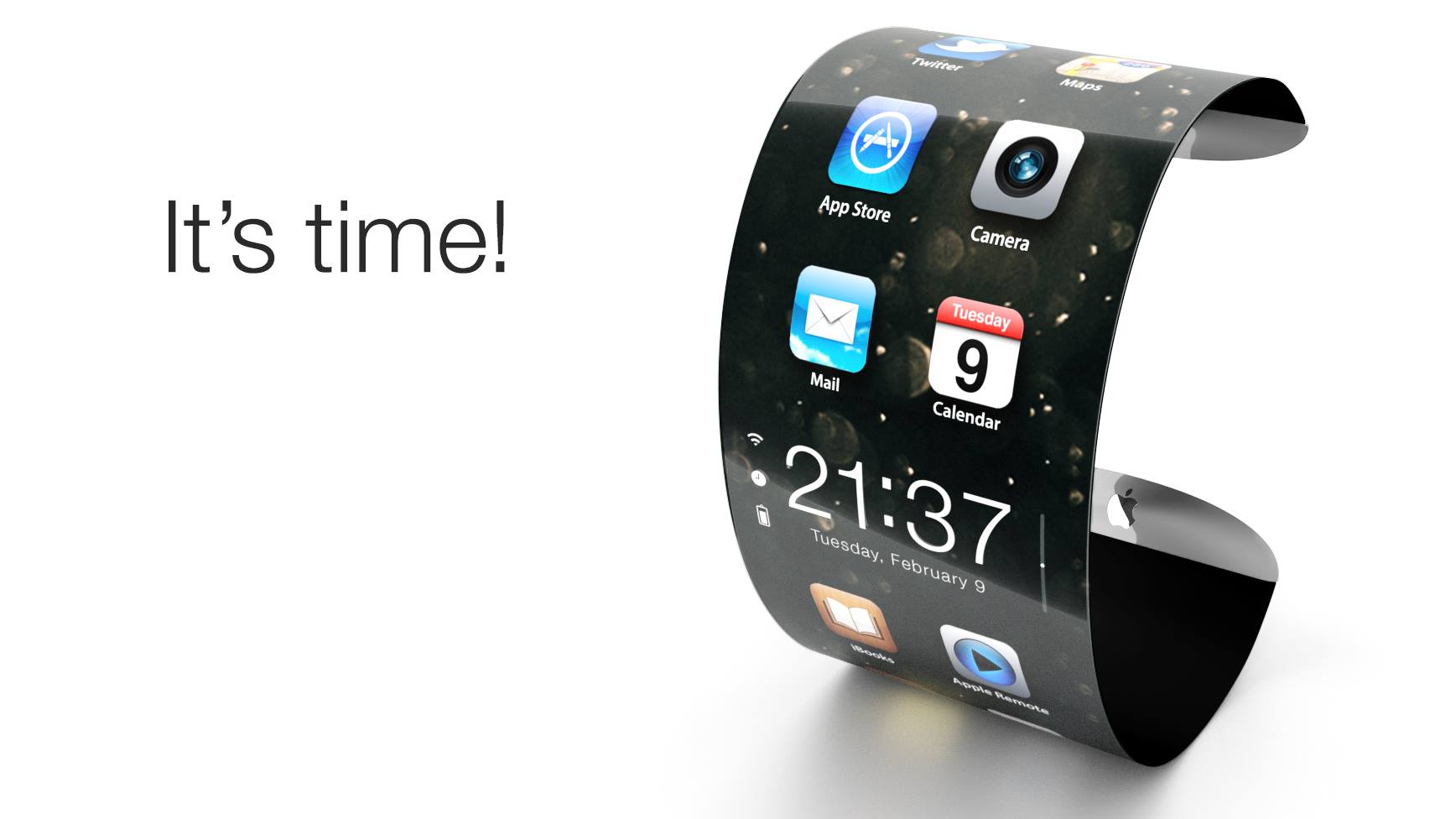
Continuing with the Apple buzz, there are lots of rumours going around. They have their keynote speech at the WWDC (Worldwide Developers Conference) on June 2nd, and lots of sources are saying there is new hardware being released. Ideas that are being thrown around are a smartwatch, Apple HDTV, the iPhone 6 or a version of the MacBook Air with Retina display. Considering that every conference for the past 1-2 years has had rumours that Apple would release a smartwatch, I’ll believe it when I see it. There are also rumours that they are considering releasing iTunes or iTunes Radio for Android, to try and compete with music streaming services such as Spotify. Although Spotify is gaining in popularity, according to their own website, only ¼ of users are paying for the service, and they still haven’t figured out how to make a profit. I suppose Apple is getting worried because single song purchases declined 12% for the first couple months of this year, and they may need to come up with something new.

This brings us to the biggest Apple rumour of the week (although it’s pretty certain). Apple is apparently going to buy Beats by Dr. Dre, for $3.2 billion, which has a lot of people trying to figure out why. Part of it has to do with what I mentioned above, with Apple trying to get into streaming music. Beats Music is a similar service that supposedly has 10,000-20,000 subscribers after 3 months on the market, although some say that’s fairly low considering the extensive advertising they’ve run for it. With this deal Apple also gets a company that is considered both fashion and electronics. The headphones are sold at a high premium, not for the quality, but for the brand name. By 2013, after 5 years on the market, Beats had cornered 59% of the market for headphones that cost more than $99. Some are speculating that Dr.Dre and Jimmy Iovine (who is a huge name in the music producing industry and co-founded Beats) would join Apple’s executive team. There are certainly all kinds of reasons this does and does not make sense, but we will have to see it unfold in the next couple of months. I’m curious to see how Apple will handle managing another brand (since the Apple brand is the key to its success) and how much of Beats it will dismantle. This would definitely be their largest acquisition ever (biggest to date is $400 million for NeXT, which brought Steve Jobs back), although it pales in comparison to Facebook’s $19 billion for WhatsApp.

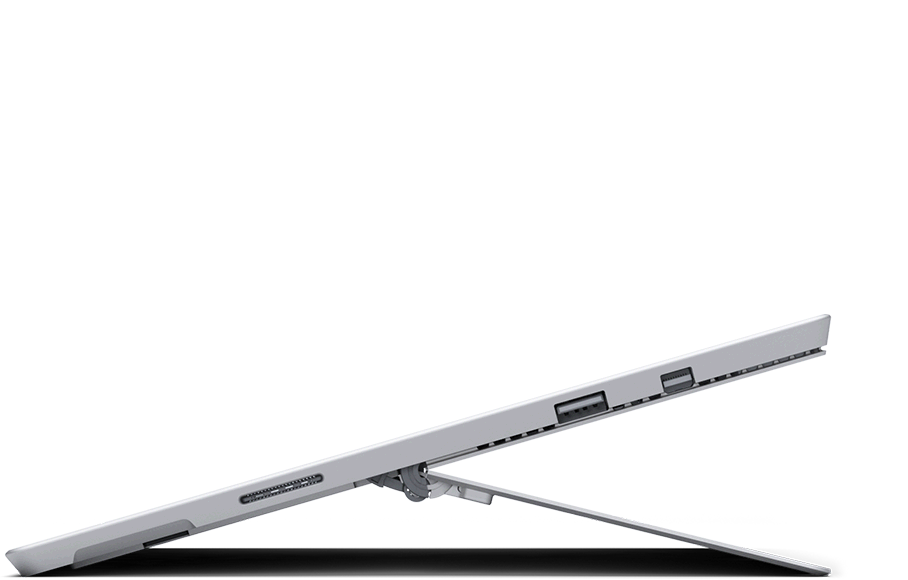
Now amidst all of the Apple rumours, Microsoft announced the new Surface Pro 3. This is a bit of a surprise considering they released the Surface Pro 2 around 8 months ago (October 2013), and the original Surface Pro a year before that (October 2012). Personally, I have the original Pro, I use it daily and it works great. But if you are looking for something new, the Pro 3 comes with a larger 12” display, has a wide-ranging kickstand and is thinner and lighter. With this model they are really looking to convince consumers that it can be their one and only device, both a tablet and a laptop. They’ve moved the Windows button to the right side, encouraging users to use it in portrait mode (very iPad like), and they’ve released a newer keyboard and stylus. The main theme in their presentation was, why choose between a tablet and a laptop when you can have both in one device?

Lastly, I wanted to mention an interesting piece of news that got hidden amongst everything else this week. China banned the installation of Windows 8 on government computers, saying that they were ensuring computer security. They were previously running Windows XP and have been slowly converting to Windows 7. This is a blow for Microsoft who continues to try and increase the share of computers running Windows 8, which currently sits at around 12%.


Lots to look forward to in the coming months, enjoy!

Tuesday, May 6, 2014

Positive Earnings, an Evolution for Snapchat, and a Cash Infusion for Yahoo

This was a week of good news for many, with several companies posting better than expected earnings. Disney surpassed expectations, posting a net income of $1.9 billion for the quarter, up from $1.5 billion last year. This was largely on the strength of their blockbuster film ‘Frozen’, as well as the success of their Infinity Disney video game. Electronic Arts (EA) also beat forecasts, posting $100 million more in net revenue than expected ($914 million in the 4th quarter vs. $812 million expected), with much of this growth coming from the digital side of the business, and the success of their titles on the Xbox One and PS4. Activision, through the success of its Call of Duty franchise and recent Diablo III release, also posted almost $100 million more in revenue than experts forecasted ($772 million earned vs. $688 million forecasted). They look to continue growing with a new game in the COD series being released in November (Advanced Warfare), as well as new first person shooter game called Destiny. However the revenue for EA and Activision was still lower than their previous years. I find it very interesting that companies’ stock prices go up or down based on how much their revenue differed from the experts predictions, not based on how they did compared to the previous year. Presumably it’s because the experts also take into account the health of an industry, overall consumer trends, inflation, regulatory changes, etc. 

Another interesting piece of tech news is the fact that Snapchat has added more features to its app. Users can now chat in-app, as well as send live video if both parties are in the chat. Very similar to the features of Skype, Snapchat is looking to expand its user base, as well as increase the engagement of current users. Although it has no direct competitors, Snapchat knows that they must stay innovative if they wish to remain relevant, and with this update they look to add a new dimension to their app: presence. Now users can see the reactions of their friends to various pictures or events (to see the ad explaining this: https://www.youtube.com/watch?v=Z9h30NcVy4E). From a marketing perspective, it’s very neat to see how they distributed the ad – they snapchatted it to all their users. This makes me wonder if users will start to receive snapchat video ads, considering they already receive “you’ve won xxx contest” snapchats from various brands (who clearly got your snapchat handle without your permission). It will be interesting to see how tolerant users are of ‘snapchat spam’, and what kind of restrictions will be placed on these ads. 

I also want to quickly mention the fact that Alibaba, the huge Chinese technology company, has officially filed its IPO papers. While it may still be several months before the IPO happens, many are predicting that it will be one of the biggest IPO’s in U.S. history. Alibaba accounts for 80% of all Chinese e-commerce, stating revenues of $6.5 billion ($2.8 billion in profits) in the first 9 months of the 2014 fiscal year. It had 231 million active buyers as of the end of December, up 44% from the previous year, and it has been valued between $170 billion and $250 billion. The part that I find quite amusing about all of this is that Yahoo has a 22.6% share in Alibaba (after selling back part of its share in 2012), and depending on the final valuation, their share in Alibaba will most likely be worth more than the entire valuation of Yahoo. By this I mean that, Yahoo is currently valued at $36.7 billion, while their share in Alibaba will probably be worth anywhere between $38 billion and $56 billion. All of this from a $1 billion investment in 2005. It should cause quite a shakeup in the tech industry now that Yahoo will have a large amount of cash on hand to continue its comeback. I’m curious to see how Melissa Mayer (Yahoo’s CEO) will approach the coming months. 

Tuesday, April 29, 2014

Scratching the Surface of Google

Today saw the wrap up of the Samsung vs. Apple patent lawsuit, as both sides gave their closing arguments. Each company says that the other infringed upon its patents and stole the technology in their devices to gain a large share of the smartphone market. Apple, being its usual self, claims that their products had been created by ‘true geniuses’ and that Samsung stole key features such as the slide to unlock and the search functionality, to help them keep up. Samsung claims that Apple infringed on their patents to make FaceTime possible and points out that they used Google’s Android operating system to run their devices. Interestingly, Google is not named in this suit, although one could argue that if anything is infringing on Apple’s patents its Android, and not Samsung’s hardware. I wouldn’t want to be one of the eight jurors who now have to decide who’s infringing on whom.

This brings me to my topic for today, which is the ever present Google. Is there anything Google is not involved in? First think about the obvious ones, which is Google’s online presence. Google includes its initial function as a search engine; its widely popular email service, Gmail; its venture into a social network with Google+; Google Maps, Google News, Google Scholar, Google books, Google Image, Google video, Google translate, Google Docs, Google Calendar, Google drive, etc. You get my point. Now think about operating systems, they invented the most widely used phone operating system in the world, Android; as well as a laptop operating system called Chrome OS that gives users an alternative to Windows, Mac or Linux. As for hardware, they’ve got tablets and phones (the Nexus series), as well as the Chromebook (laptop) and Chromecast (media streaming device). 


But it is the products that Google makes that fall outside of these categories that are truly interesting. Developed in a facility called Google X, Google works on projects that most of us have only heard of in science fiction movies. Some of the things that are supposedly worked on at this facility include things such as a space elevator, a hover board, contact lenses that monitor glucose levels, and a project that is trying to bring internet to everyone through balloons flying in the stratosphere. Two things however, have become very real products that may have a huge impact on our society.

The first, is Google Glass. Essentially a head mounted computer, it allows wearers to interact with the internet through voice commands. Users can search the internet, take photos and videos, sends text messages and emails, use google maps, etc. (To get an idea of what Google Glass can do: https://www.youtube.com/watch?v=v1uyQZNg2vE). While this is an amazing device that has endless possibilities, it seems our society is unprepared for it in many ways. Huge privacy concerns have been raised considering Glass wearers can take pictures and record video of others without their permission or their awareness. The legal system also seems to be unsure of how to deal with Glass, considering the implications of using the technology and driving (distracted driving?), filming arrests, etc. There is also the fact that these users are walking around talking to themselves (although is that much different than those talking into their Apple earbud mics?). I think people aren’t quite sure how to adapt to these devices and that they will eventually gain traction.

The second product that is becoming a reality is Google’s driverless car. They have logged over a million kilometers in self-drive mode, although much of that is on the freeway. Yesterday Google released a video showing the kinds of obstacles their cars have overcome when it comes to city driving. They can now deal with things such as cyclists, construction, rail way tracks, pedestrians, parked cars, etc (to watch the video: https://www.youtube.com/watch?v=dk3oc1Hr62g#t=66). However these cars are a long way from being ready for the public, and Google isn’t quite sure how to market or sell them (adopt an Android like attitude and give away the software?). Think about the benefits! Drivers could read or sleep or do anything while heading somewhere. The transportation industry would be transformed because you could replace drivers with driverless trucks. They wouldn’t need to stop to sleep or eat or rest. Imagine being picked up by a driverless taxi late at night, would you feel safer? Similar to Google Glass however, lawmakers aren’t quite sure how to deal with these cars. Some states have allowed them on the road for testing purposes only, and they still require a person in the car at all times. 

With all of this said, is Google well on its way to being a constant presence in our lives? Is it already there? Is Google really out to help make the world a better place? Even with good intentions, are all of these products going to make our lives better? It will be interesting to see in the coming years how much of our lives include the entity that is Google. 

Tuesday, March 25, 2014

The Death of Dual-Boot Devices & Windows XP

The world of technology as always is motoring along with new releases, mergers, people calling for Apple to release something new and great, etc. Through all this noise, I want to point out some things that I think will have a big impact on the world of tech in the next few months.

In the past couple months we’ve seen several companies announce dual boot devices – devices that run both Windows 8 and Android. However one of the only companies to actually bring these devices to the market is Asus. It’s now come out that both Microsoft and Google have asked these companies to stop, or to not release dual-boot systems. Both companies have threatened to not support dual-boot systems or provide any updates. For companies trying to make these devices, taking on one of these giants is hard enough, but taking on two is near impossible. Which is why we have seen very few of these units hit the market. The thing is, these devices revolve around a really cool concept, although the idea hasn't quite been perfected in any of the devices we've seen so far. In my store, we are selling one of the Asus all-in-one’s, which is running Windows 8 when it’s docked as a desktop, and then switches to Android when it’s removed and used as a tablet. This gives customers the best of both worlds, giving them a full operating system when using the device as a computer, and when using it as a tablet they get access to a bigger app store, as well as an OS that is easier on the battery. From the view of the manufacturers, I understand why you wouldn’t want these devices to exist. After all, who wants to share their room with someone else? There’s also the marketing headache to consider, as well as support for the device if one system is less secure than the other and allows the entire device to become corrupted. All of this said, it looks like Asus is being forced to pull their devices from the market, taking with it any hope for dual-boot devices to take off. 

Microsoft announced, months ago, that they would be ending support for Windows XP on April 8th, 2014 (they’ve even got a countdown clock on their website). This means that they will no longer be releasing patches and fixes, allowing hackers a much easier time to take advantage of vulnerabilities. The shocking thing is that even though the system is 12 years old (which is ancient in the world of tech), it is still running on approximately 30% of PCs. Microsoft is attempting to push everyone over to Windows 8.1, but a large number of users have instead run out to buy a Windows 7 upgrade, sticking with what they know and hoping to skip Windows 8 altogether (there are already rumours about Windows 9). However Microsoft is not making this easy, ending shipments of Windows 7 upgrades to many retail stores and not selling it on their own website. To be fair, they are worried that they will run into the same issue with Windows 7 that they are having with XP - approximately 50% of PC users are running Windows 7. The strangest part of this whole story is that around 95% of the world’s ATMs are running Windows XP. This leaves them incredibly vulnerable to hackers, and apparently Microsoft has agreed to extend support for these machines for a while, at a huge cost of course. They will also be ending support for Office 2003.

Sticking with Microsoft, it is believed that they will be announcing their new Office for Mac 2014 on March 27th. Apparently, this new version will also include a version of Office for the iPad. This would be an interesting move on the part of Microsoft because they will be competing directly with Apple’s office suite (Pages, Numbers and Keynote) which are now free on the iPad. It will also remove one of the key selling features of any Windows 8 tablets, especially the Surface, which is that they are the only tablets that can run Microsoft Office. It is also unlikely the Microsoft sells Office in the app store considering Apple takes a 30% cut. With Microsoft selling their software on iPads, it looks like they are undermining their own hardware and operating system, but we will have to see what kind of demand they receive.
Haunted Empire By Yukari Iwatani Kane

One last point of interest: a book was recently released by journalist Yukari Iwatani Kane, called Haunted Empire. It is about how Apple has fared in the past two years without Steve jobs, and looks at whether the brand can stay relevant and iconic without him. Of course Apple fans aren’t happy with it and disagree with its view of Apple’s declining future. Looks to be an interesting read! 

Wednesday, February 5, 2014

Microsoft's New CEO & Lenovo's Big Moves

Considering the media has been largely focused on the upcoming Olympic Games in Sochi, Russia (and will be for the next two weeks), there are a couple of things that have mostly slipped under the radar.

satya-nadella-2Microsoft finally named a new CEO! After Steve Ballmer announced last August that he would be stepping down, the company started a search for their 3rd CEO. After 38 years of existence Microsoft has had a total of 2 CEO’s – Bill Gates and Steve Ballmer. So, who is the man they’ve chosen to fill these very large shoes? His name is Satya Nadella, and he’s been with the company for 22 years. Many experts thought that Microsoft would go with a big name (ex: Ford CEO Alan Mulally), or focus on someone in the world of tech but outside of the company (Ex: Former Nokia CEO Stephen Elop), but at the end of the day they went with someone who knows the company inside and out. Nadella has been an executive in many of Microsoft’s fastest growing segments, including Office, and held the position of Executive VP of cloud computing before his promotion. Microsoft is looking to shift its focus back towards its very profitable software division and away from its failing hardware division. There will be a lot of pressure on Nadella to help the company become innovative and competitive once again. Along with this, Bill Gates stepped down as Chairman and took up the new position of technology advisor. 

Lenovo has certainly made a splash lately with some big acquisitions. They have been attempting to get a foothold into the U.S. market, and started off by announcing that they were buying IBM’s low end server business for $2.3 billion. On top of that, they just announced that they will be buying Motorola’s handset division from Google for $2.91 billion. Considering Google bought Motorola for $12.5 billion in 2012, this is, at first glance, bewildering. Google is in fact, keeping the majority the mobile patents it acquired, which is considered the prize asset. This is a mostly win-win situation, where Google gets the patents it needs to fight off costly litigation (it hopes), and Lenovo acquires a mobile company that is already selling phones in the U.S. giving it an inside edge to get its own phones into the market. The Beijing based company has been growing consistently, now commanding an 11.8% total share of the global market for PCs and tablets, second only to Apple.  

Outside of the world of technology, I have to mention some of the negative press coming out of Sochi. Apparently 7 years of preparation and mind blowing $51 billion (China only spent $40 billion) isn’t enough for Russia to be adequately ready to host the Games. The media is bringing us stories of hotels still under construction, undrinkable water, the enormous number of security forces, and the potential security threats, just to scratch the surface. With the opening ceremonies on Friday, it should be an interesting 2 and a half weeks. Go Canada Go!

The Official Sochi 2014 Canadian Olympic Team